
What we review

Real estate and land, read against the same six inputs.

The first review considers location, condition, timing, numbers, authority, and fit. It is a starting point for a conversation, not a promise about the outcome.

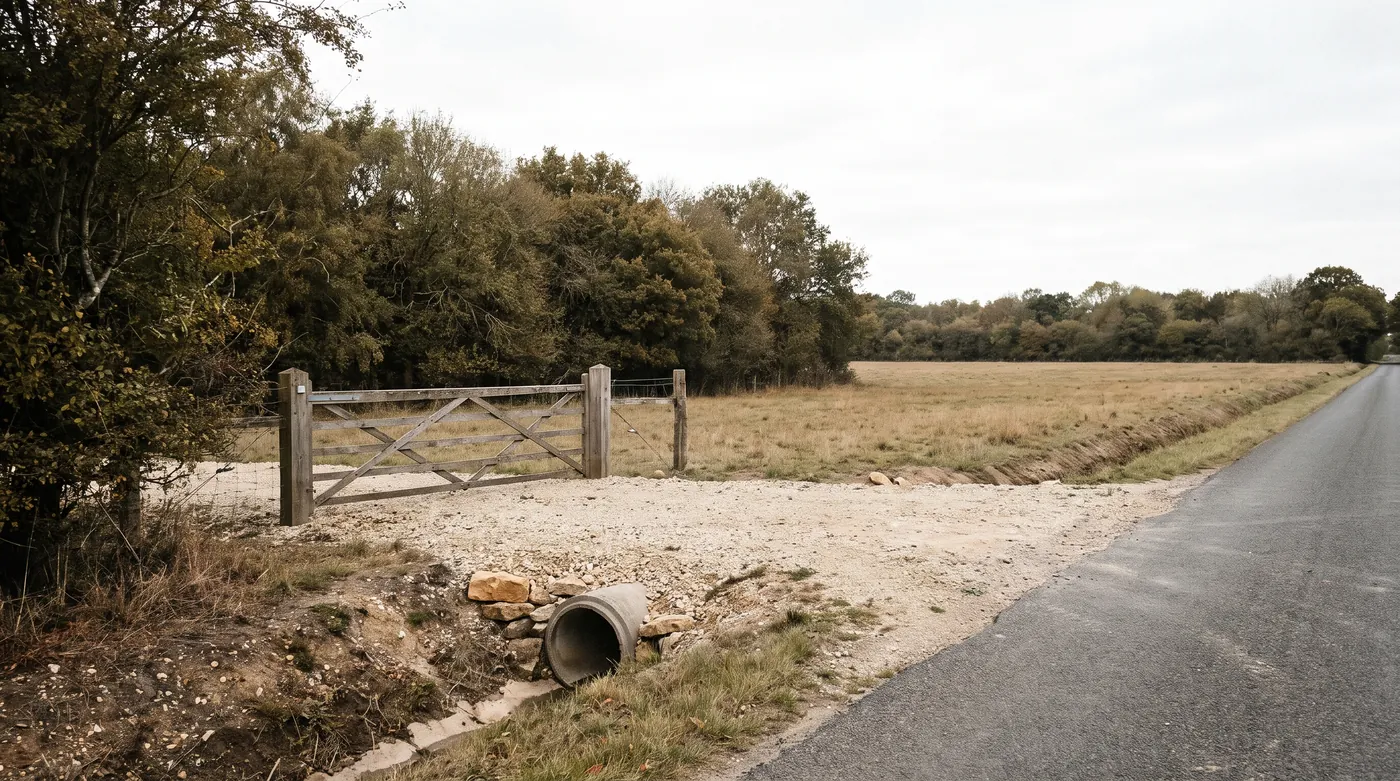
A wooden field gate on a gravel pull-off beside a quiet road, with a drainage culvert, an open field, and a tree line.
Conceptual brand imagery. Not a property under review, owned, or for sale.

The six inputs

Six inputs shape the first read.

The same inputs, in the same order, every time. They keep attention on what can be discussed clearly and show where the gaps are.

  1. Location

    Where the property sits, how it is reached, and the setting around it.

  2. Condition

    What is known about the current state of the property, and what is not yet known.

  3. Timing

    The decision window, and anything that makes timing matter more than usual.

  4. Numbers

    The asking position or expected figure, and the other figures that frame the situation.

  5. Authority

    Who owns the property and who is able to make decisions about it.

  6. Fit

    Whether the combined facts support spending more time on the opportunity.

Useful initial context

What helps at the start, by kind of property.

Coleman & Stengel Co. reviews real estate and land. The context that helps differs between a building and a parcel, and every detail is read as submitted or as supported by a source you point to.

Real estate

Buildings and the lots they sit on.

  • Property type A house, a small building, a commercial space, or something mixed. Say what it is, not what it could become.
  • Location A street address, or the nearest city and state if the address is not ready to share.
  • Condition What is known about the current state. Anything uncertain is better marked unknown than guessed.
  • Occupancy status Owner-occupied, tenant-occupied, vacant, or mixed. No tenant names or personal details.
  • Timing The decision window, and whether a date or deadline matters.
  • Asking position A figure, a range, or a note that one has not been decided.

Land

Parcels with or without improvements. Nothing about land is treated as buildable, legally accessible, subdividable, entitled, or suited to a particular use until it is confirmed.

  • Approximate location The nearest town and county is enough to start. A parcel reference helps if you have it.
  • Parcel reference The county parcel number or a similar identifier, if known.
  • Acreage Approximate is fine. Surveyed figures are noted as surveyed, others as approximate.
  • Known access Road frontage, an easement, a shared drive, or unknown. Access is confirmed later, not assumed.
  • Known utilities or constraints Water, sewer or septic, power, zoning, flood, easements. Unknown is an acceptable answer.
  • Timing Whether there is a date that matters, or no fixed timing.

Scope

What the first review is, and what it is not.

It is a structured look at the known facts.

The company considers what has been shared, identifies the important gaps, and decides whether a direct conversation is worth both parties' time. Unknown is a legitimate answer at every step.

Do not enter a property, contact occupants, arrange inspections, or take photographs you are not authorized to take in order to complete a submission. What you already know is enough to start.

It is not a professional opinion or a commitment.

A first review is not:

  • an appraisal or a valuation
  • an inspection
  • a title examination
  • a legal opinion
  • a financial recommendation
  • an offer, an acceptance, or an agreement

The initial inquiry does not establish ownership authority, clear title, property value, legal compliance, or any obligation to purchase.

Ready to describe the property?

A short message is enough to start. Or email opportunities@colemanstengelco.com with a question.